
CEOs expect to finish the ongoing March quarter with positive growth as the corporates get back to work in full strength.

Rationalisation of income tax slabs, infrastructure status for digital services and incentives to hydrogen storage as well as fuel cell development were some of the suggestions made by various stakeholders at the pre-Budget consultation meeting convened by Finance Minister Nirmala Sitharaman. The customary pre-Budget consultation meetings were held with the finance minister virtually between December 15 and December 22, as per the finance ministry statement. More than 120 invitees representing seven stakeholder groups participated in eight meetings, scheduled during this period, it said.

Takes a knock after RBS changes plan on Williams & Glyn; contract loss to impact 3,000 Infy staffers

'Such big falls are quite frequent these days, so do not try to time this market.' 'Use big dips to accumulate quality stocks.'

The price of aviation turbine fuel has increased by 50 per cent since January and the situation has adversely impacted IndiGo, its CEO Ronojoy Dutta said on Wednesday. He said the government should bring aviation turbine fuel (ATF) under the Goods and Services Tax (GST) and make flying affordable for consumers and viable for airlines. IndiGo is India's largest airline and with around 55 per cent share in the domestic passenger market.

The "asset-right" strategy, reiterated by ITC chairman Sanjiv Puri during the company's 112th annual general meeting (AGM) on August 11, received a thumbs up from the analysts. They, however, believe that sustained earnings growth and synergies with the demerged hotel's vertical will help the stock break out from the ongoing consolidation. "The stock is expected to consolidate between Rs 420 and Rs 450 in the near future.

The manufacturing sector during the fourth quarter recorded a growth rate of 9.3 per cent while the farm sector grew at 2.3 per cent.

In the past few months, 45 companies have signalled their intent to raise money through the institutional placement route.

'These companies hired in high numbers last year and are balancing that out this year by recruiting fewer freshers.'

Don't be surprised if growth in the second half of the financial year drops below 4%, which is where it was in the year before the pandemic, warns T N Ninan.

'If private capex has to kick in, there should at least be 2-3 years of visibility.'

Samvat 2072: Auto sector could see faster recovery

'The pipeline of new industrial projects is the best I've seen in the last 10 years, and it looks solid enough to sustain for at least a few quarters,' points out Naushad Forbes, adding, 'It is only when we get back to the same labour force participation we saw before Covid that the economy will have truly recovered.'

Low consumer demand, a slide in investments and troubles in the banking sector should prompt the government to recalibrate taxes and expenditure. It is also important to ramp up spending on health care and education, says CII president Sumit Mazumder.
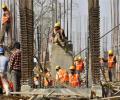
India's economy has bounced back amazingly from the Covid-19 pandemic and nationwide lockdown over the last one year, but it is not out of the woods yet, according to the World Bank, which in its latest report has predicted that the country's real GDP growth for fiscal year 21/22 could range from 7.5 to 12.5 per cent.

Chief Economic Adviser K V Subramanian on Friday said there is an "upside potential" in the estimates about the economy during the current financial year amid a faster-than-expected recovery. He said the final print could be better than GDP estimates given by various institutions, including the Reserve Bank of India, which projected contraction of 9.5 per cent during 2020-21. During the second quarter, India's economy recovered faster than expected as a pick-up in manufacturing helped GDP clock a lower contraction of 7.5 per cent and held out hopes for further improvement on consumer demand bouncing back.
Defying trends, the country's largest private sector lender, HDFC Bank, has shifted its asset mix significantly towards high-rated segments. As a result, its wholesale-to-retail mix has tilted heavily in favour of wholesale, even at the cost of margins. Further, it is even looking to ramp up its branch network, with an aim to service clients within a 1-2 km radius rather than the current 5-6 km radius.

Shares of asset management companies (AMCs) have rallied in the last 3-4 sessions due to clarity on regulatory changes in total expense ratios (TER) and expectations that it won't upset profits much in the long run. HDFC AMC has gained over 12 per cent in the last four sessions, while Nippon AMC and UTI AMC are up around 5 per cent. Aditya Birla Sun Life (ABSL), the only other listed AMCs, has risen more than 2.3 per cent in the last four sessions.

'If individual stocks start falling 25% to 30% or more, then I doubt how many of them will be able to withstand that (kind of selloff). That is when you'll see panic coming in.'

Benchmark equity indices Sensex and Nifty ticked higher for the ninth straight session on Thursday, buoyed by fag-end buying in banking, financial and realty stocks amid encouraging domestic retail inflation data. Weak trends in IT counters and fall in the overnight US equity markets triggered by fresh concerns over recession, however, put a check on market's uptrend. In a largely subdued session, the 30-share BSE Sensex went up marginally by 38.23 points or 0.06 per cent to settle at 60,431.

A pick-up in farmer income could have a cascading impact on the rural economy, though agriculture is becoming a smaller part of India's overall rural incomes.

Developing more sources of supplies to guard against disruptions may emerge as the next big trend. But that may not necessarily mean flow of more investments into India, unless investors are assured, besides important economic factors and impartiality of institutions, that social disharmony will not cause unexpected disruptions.

As temperatures soar across the country, amid searing heat wave, analysts see power demand hitting fresh record highs this year. The time, therefore, may be opportune to add related stocks on dips as higher demand boosts earnings visibility, they said. On April 18, India's electricity demand touched a new high of 216 gigawatts.

Gross collection of tax on corporate and individual earnings jumped nearly 24 per cent so far in the current fiscal year that started on April 1, the tax department said on Sunday. The gross collection of taxes on corporate earnings rose 16.74 per cent during April 1 to October 8, while personal income tax collection jumped 32.30 per cent, the tax department said in a statement. Direct tax collection came at Rs 8.98 lakh crore between April 1 to October 8, 2022, 23.8 per cent higher than the gross collection in the corresponding period a year ago.

India's economic growth accelerates to 7.4% in Sept quarter

'The current economic contraction is certainly due to the lockdowns as a response to the pandemic, which is an act of God.' 'Nobody has seen such a thing in the last 100 years.' 'Saying that this was an act of mismanagement is largely incorrect'

It said the money supply recovered to its pre-demonetisation level in mid-2017 and is now increasing steadily, similar to the previous trend.
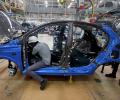
While sales of compact cars, including models such as Swift, Celerio, Ignis, Baleno and Dzire declined, sales of utility vehicles, including Vitara Brezza, S-Cross and Ertiga, increased 26.3 per cent to 19,177 units as compared to 15,178 in the year-ago month.

Ajit Mishra, vice president, Research, Religare Broking, answers your queries.

Online skill-based gaming industry has made a case for retaining the service under 18 per cent GST slab instead of putting it into the highest 28 per cent tax rate category, saying the move will badly hit the $2.2-billion sector. The increase in taxation would not only have catastrophic impact on the industry but also encourage offshore operators who would circumvent Indian tax jurisdiction by hosting games in some other country, Games24x7 Co-CEO Trivikraman Thampy said. "It would be a triple whammy -- the industry loses out, the government loses out on tax revenue and players loses out as they would be exposed to unscrupulous operators," he said.

Britain hopes that after the forthcoming Lok Sabha elections the next government will carry forward the economic reforms process that should see India emerging as the third biggest economy in the world over the years to come.

There's no place like home, but even for the affluent buying one in India is difficult. On top of that, the coronavirus pandemic-now in its eighteenth month-has made life uncertain. A hopeful thing is buying a house looks alluring as loan interest rates fall below 7 per cent, their multi-decadal lows. The slow decline in GDP growth after demonetisation, followed by the economic shock caused by Covid-19 waves, has hurt us unevenly.
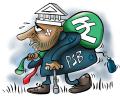
The banking sector's credibility is on thin ice. Unless the government takes strict steps, things could get worse.

But it is likely that campaign spending resulted in some positive activity through this period.

'This is what happens to a party when it gets trapped in the vicious circle of nepotism and dynastic politics'

Through the past 12 months, the Bank Nifty has risen 55%

From the Sensex pack, Tata Motors, Sun Pharma, Wipro, Tata Consultancy Services, UltraTech Cement, Tech Mahindra, Bajaj Finserv, HCL Technologies, Infosys and IndusInd Bank were the major laggards. NTPC, Power Grid, Reliance Industries, Tata Steel, HDFC and HDFC Bank were the major winners.

'People are doing a lot of trading.' 'Short-term euphoria can be seen.' 'Retail participation is best through MFs and PMS.'

So which sectors are likely to do well in 2022? Should you focus on domestic economy-related sectors or export-oriented ones?

Ambani is in good company. The likes of ultra-rich individuals like hedge fund billionaire Ray Dalio and co-founder of Google Sergey Brin have chosen Singapore to establish their family offices. So have British inventor James Dyson, famous for his bladeless fans and hair dryers and vacuum cleaners, and Zhang Yong, founder of China's Haidilao hotpot restaurant chain, reports Lee Kah Whye.
